The Raspberry Pi operates in the open source ecosystem: it runs Linux (a variety of distributions), and its main supported operating system, Pi OS, is open source and runs a suite of open source software.
Raspberry Pi is a low cost, credit-card sized computer that plugs into a computer monitor or TV and uses a standard keyboard and mouse. It is a capable little device that enables people of all ages to explore computing and to learn how to program in languages like Scratch and Python.
Raspberry Pi (/paɪ/) is a series of small single-board computers (SBCs) developed in the United Kingdom. The original Raspberry Pi computer was developed by the Raspberry Pi Foundation in association with Broadcom. Since 2012, all Raspberry Pi products have been developed by Raspberry Pi Ltd, which began as a wholly-owned subsidiary of the Foundation.
The Raspberry Pi project originally leaned towards the promotion of teaching basic computer science in schools.[3][4][5] The original model became more popular than anticipated,[6] selling outside its target market for diverse uses such as robotics, home automation, industrial automation, and by computer and electronic hobbyists, because of its low cost, modularity, open design, and its adoption of the HDMI and USB standards.
Several modules from the Raspberry family are interesting for the piscada projects. And in fact any of the raspberry units can be used and integrated in a piscada project.
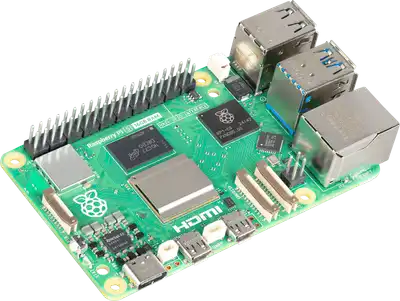
The main processor selected for the piscada server is the latest model (2025 Q1) Raspberry Pi5.
Two other modules are easily identified as possible “partners” to create a IoT distributed solution for data acquisition and edge computing. These are :
Raspberry Pi Zero 2 W
Raspberry Pi Pico W
Raspberry Pi 5
Raspberry Pi Zero 2 W
Raspberry Pi Pico 2 W
Raspberry Pi 5
Form factor
85mm × 56mm
Processor
Broadcom BCM2712 2.4GHz quad-core 64-bit Arm Cortex-A76 CPU, with Cryptographic Extension, 512KB per-core L2 caches, and a 2MB shared L3 cache
Features:
VideoCore VII GPU, supporting OpenGL ES 3.1, Vulkan 1.2
Dual 4Kp60 HDMI® display output with HDR support
4Kp60 HEVC decoder
LPDDR4X-4267 SDRAM (options for 2GB, 4GB, 8GB and 16GB)
Dual-band 802.11ac Wi-Fi®
Bluetooth 5.0 / Bluetooth Low Energy (BLE)
microSD card slot, with support for high-speed SDR104 mode
2 × USB 3.0 ports, supporting simultaneous 5Gbps operation
2 × USB 2.0 ports
Gigabit Ethernet, with PoE+ support (requires separate PoE+ HAT)
2 × 4-lane MIPI camera/display transceivers
PCIe 2.0 x1 interface for fast peripherals (requires separate M.2 HAT or other adapter)
5V/5A DC power via USB-C, with Power Delivery support
Raspberry Pi standard 40-pin header
Real-time clock (RTC), powered from external battery
3 × programmable I/O (PIO) blocks, 12 state machines in total
Flexible, user-programmable high-speed I/O
Can emulate interfaces such as SD card and VGA
Pi Ecosystem - partners
As an approved Raspberry reseller The Pi Hut is an amazing source of add ons and products that make this ecosystem great.
One of the great options are the “HAT” solutions:
HAT stands for Hardware Attached on Top, it’s a term used to describe add-on boards for the Raspberry Pi 3, 4, 5 and Zero or Pico models that usually sit on top of the Raspberry Pi board. These boards are compatible with the Raspberry Pi as they share the same 40-pin GPIO pinout, meaning the pins are in the same places.
The Pi Hut
Example: 2 Relays NO/NC installed on top af a Raspberry Pico
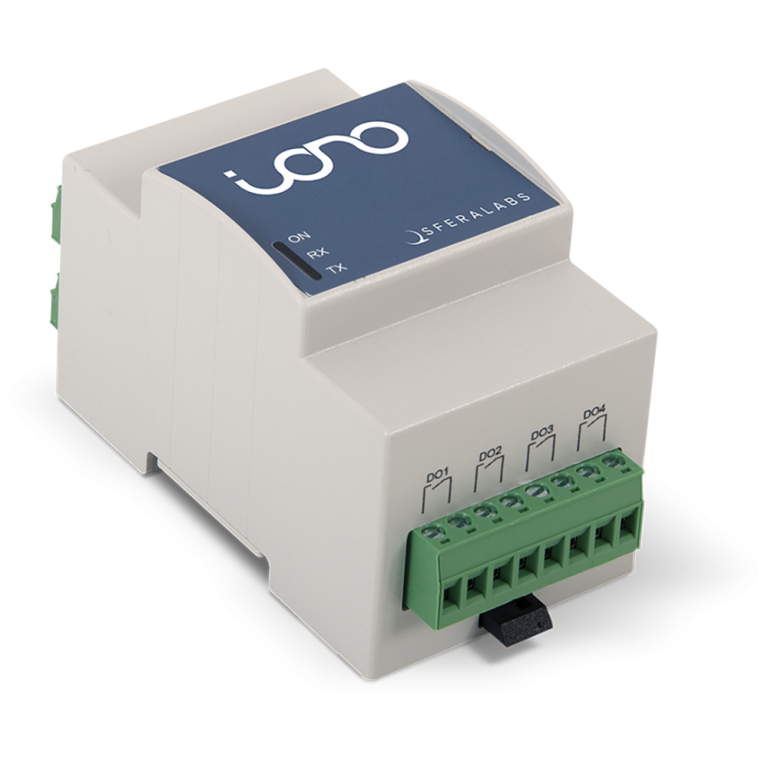
Example: DIN Rail Mount 8 SPDT IoT Power Relay Module - attaches to a Rasperry Pi 5
Example: Sixteen LV Digital Inputs 8-Layer Stackable HAT for Raspberry Pi (v3.0)
Example: Raspberry Pi Pico 4 x Relay Board
Industrial Raspberry Pi PLC with a wide range of digital and analog inputs and outputs, NO/NC relays, UPS, RS-232 and RS-485 interfaces, CAN, dual SD card, RTC, watchdog, secure element.
Industrial Raspberry Pi PLC powered by the RP2040 microcontroller, featuring digital/analog I/O, power relays, RS-485 connectivity.
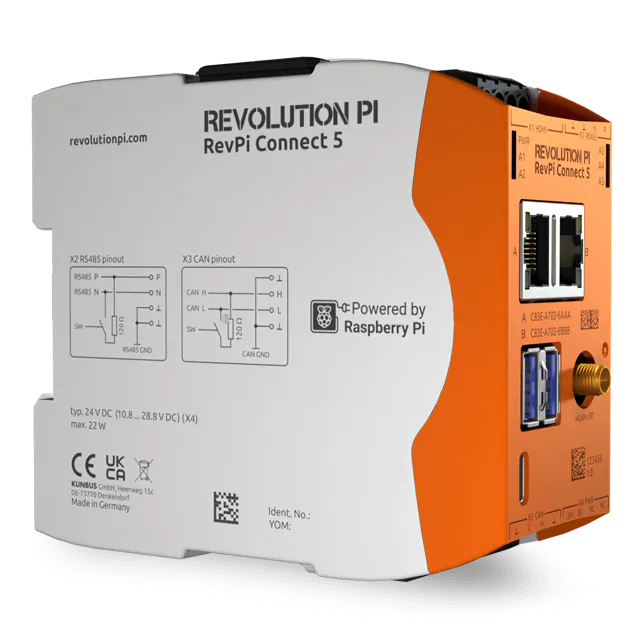
The RevPi Connect 5 is a robust 24 V industrial PC for IIoT and automation projects based on the Raspberry Pi Compute Module 5.
Pi Ecosystem - communications
The Pi boards give us a good selection of communication possibilities. The specs above indicate:
Ethernet port
Bluetooth
Wifi
Connections for I2C
The software base of the operating system of all Raspberry is the embedded Linux OS.
“Raspberry Pi OS is a free, Debian-based operating system optimised for the Raspberry Pi hardware.”
piscada runs on the Pi OS.
All the SCADA definition is done in a database (MariaDB SQL) solution. This database allows for the remote connection of the piscada user back end.
Communication to peripherals is done over Ethernet or wifi, using the MQTT publish subscribe definition.
These peripherals can implement other protocols like Modbus to address specific customer devices.